
CLEANER MOUNTAINS

BUBBLE PFFFF!
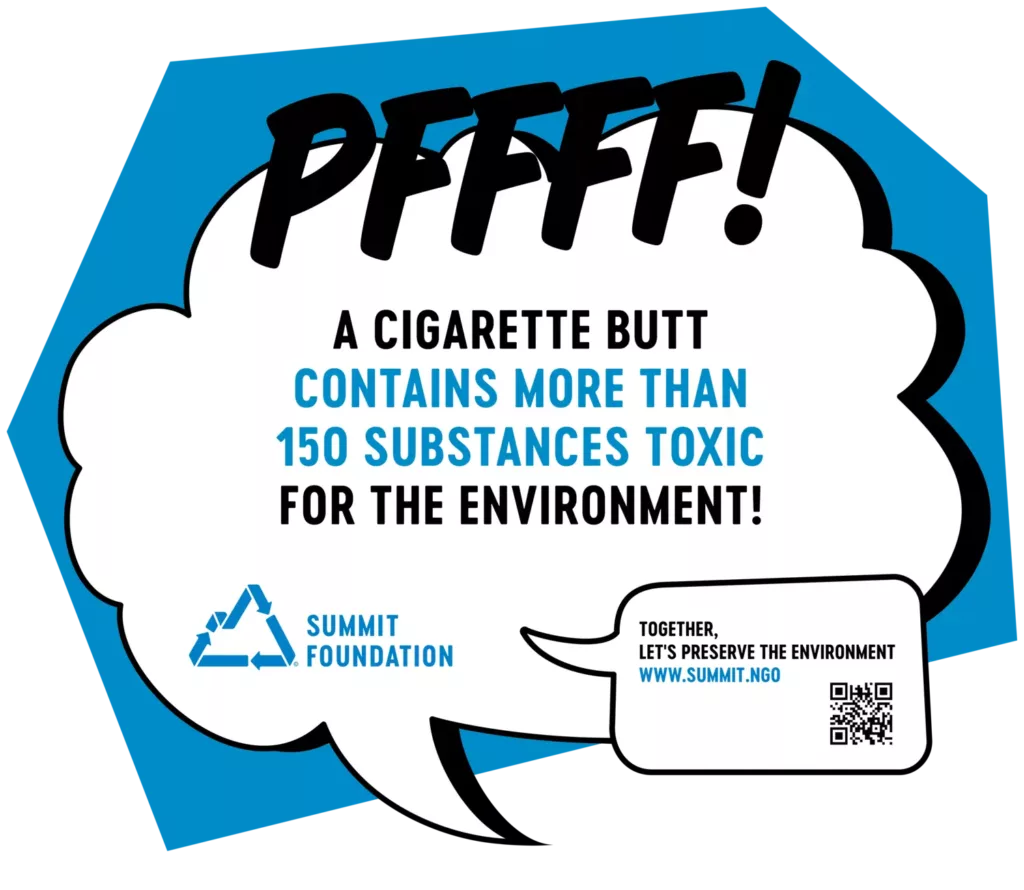
• A cigarette butt contains more than 150 substances that are toxic to the environment.
• One cigarette butt can pollute 1,000 liters of water.
EXPLANATIONS
Cigarette butts are among the types of litter most commonly found in nature. During our Clean-Up events, one third of the waste collected is cigarette butts. Worldwide, 4.5 trillion cigarette butts¹ are thrown into the environment. And given their small size, they can be carried for thousands of kilometers by wind and waterways. A cigarette butt thrown in a Swiss mountain can therefore end up in an ocean.
This situation is particularly problematic given their toxicity. In fact, it is estimated that a cigarette butt contains around 5,000 chemical compounds, including more than 150 substances² recognized as toxic to the environment. Among them are arsenic, nicotine, polycyclic aromatic hydrocarbons (PAHs), and heavy metals. In addition, the cigarette filter is mainly made of cellulose acetate, a synthetic polymer that is poorly biodegradable³, which can remain in nature for several years.
Ces substances polluent les sols et les eaux. Les filtres se fragmentent sous l’effet de la lumière et s’accumulent dans l’environnement sous forme de microplastiques, particulièrement dans les milieux aquatiques. Les substances toxiques se relâchent dans l’environnement au contact de l’eau. Un seul mégot de cigarette peut contaminer jusqu’à 1 000 litres d’eau⁴ !
This pollution has negative impacts on biodiversity⁵, especially for aquatic ecosystems. A study concluded that a single cigarette butt can kill half of the small fish living in 1 litre of water⁶. Moreover, some of the toxic substances are bioaccumulative and can end up in our food.
So, what can be done? Even if the best solution is not to smoke at all, here are some tips to prevent cigarette butts from becoming a source of pollution:
• Dispose of your cigarette butts only in bins or ashtrays provided for this purpose in resorts, at ski lifts, and in restaurants.
• Use a portable ashtray, such as the Ecobox offered by Summit Foundation.
• Keep your cigarette butts with you until you can dispose of them properly.
Together, let’s act for a clean mountain free of cigarette butts.
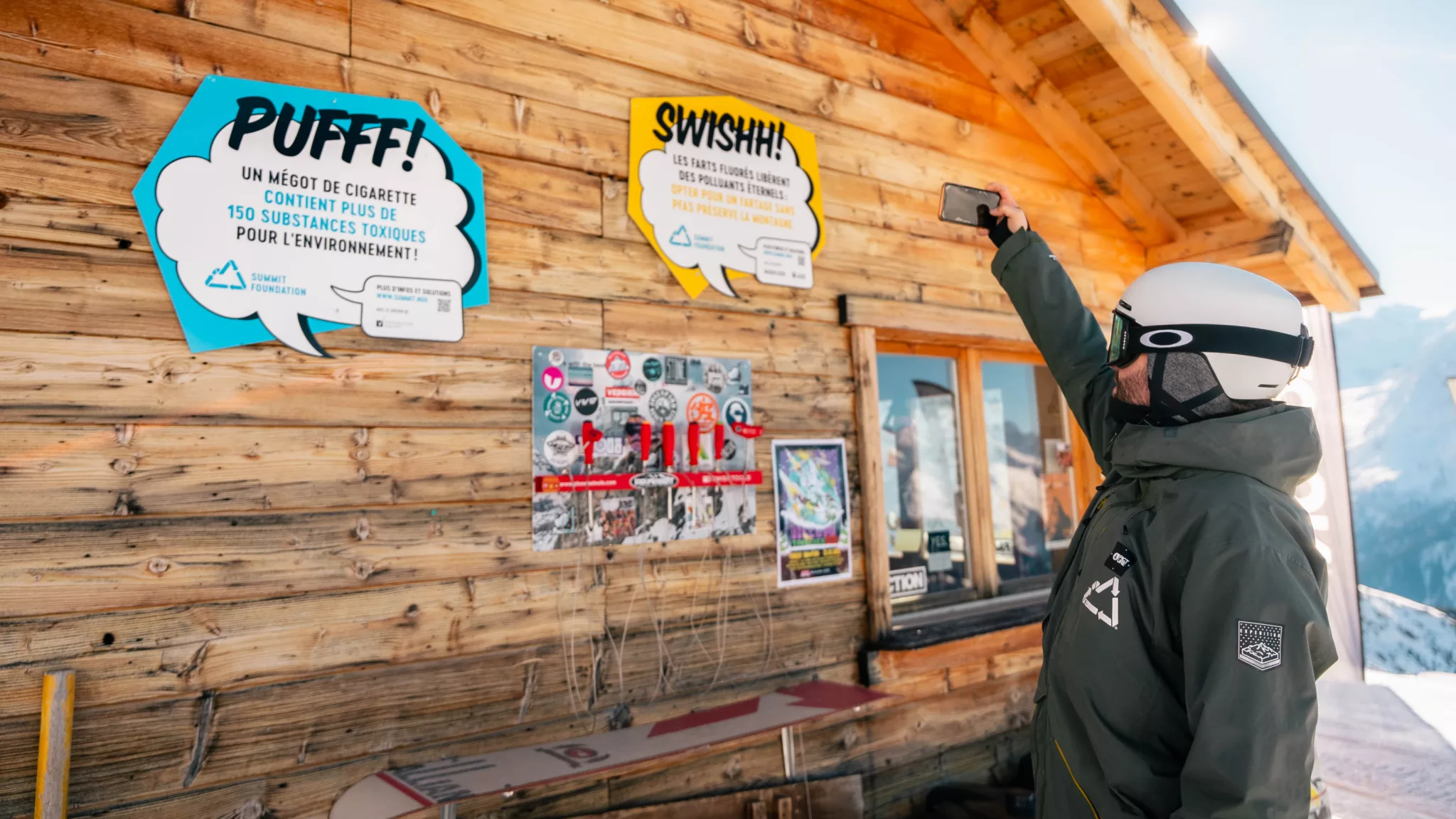
THE PFFFF! BUBBLE IN ACTION
SOURCES
- Tiny But Deadly: Your Butt on Plastic - Earth Day. https://www.earthday.org/tiny-but-deadly-your-butt-on-plastic/
- Araújo, M. C. B., & Costa, M. F. (2019). From Plant to Waste: The Long and Diverse Impact Chain Caused by Tobacco Smoking. International Journal of Environmental Research and Public Health, 16(15), 2690. https://doi.org/10.3390/ijerph16152690
- Vanapalli, K.R. et al. (2023). Cigarettes butt littering: The story of the world’s most littered item from the perspective of pollution, remedial actions, and policy measures. Journal of Hazardous Materials, 453, 131387. https://doi.org/10.1016/j.jhazmat.2023.131387
- Centre Ecotox. (2019). Zigarettenstummel (PDF). https://www.centreecotox.ch/media/194908/2019_zigarettenstummel_fr.pdf
- Beutel, M.W.; Harmon, T.C.; Novotny, T.E.; Mock, J.; Gilmore, M.E.; Hart, S.C.; Traina, S.; Duttagupta, S.; Brooks, A.; Jerde, C.L.; et al. (2021). A Review of Environmental Pollution from the Use and Disposal of Cigarettes and Electronic Cigarettes: Contaminants, Sources, and Impacts. Sustainability, 13, 12994. https://doi.org/10.3390/su132312994
- Slaughter, E.; Gersberg, R.M.; Watanabe, K.; et al. (2011). Toxicity of cigarette butts, and their chemical components, to marine and freshwater fish. Tobacco Control, 20(Suppl 1), i25-i29. https://tobaccocontrol.bmj.com/content/20/Suppl_1/i25