
CLEANER MOUNTAINS
BUBBLE KRCH! ORANGE
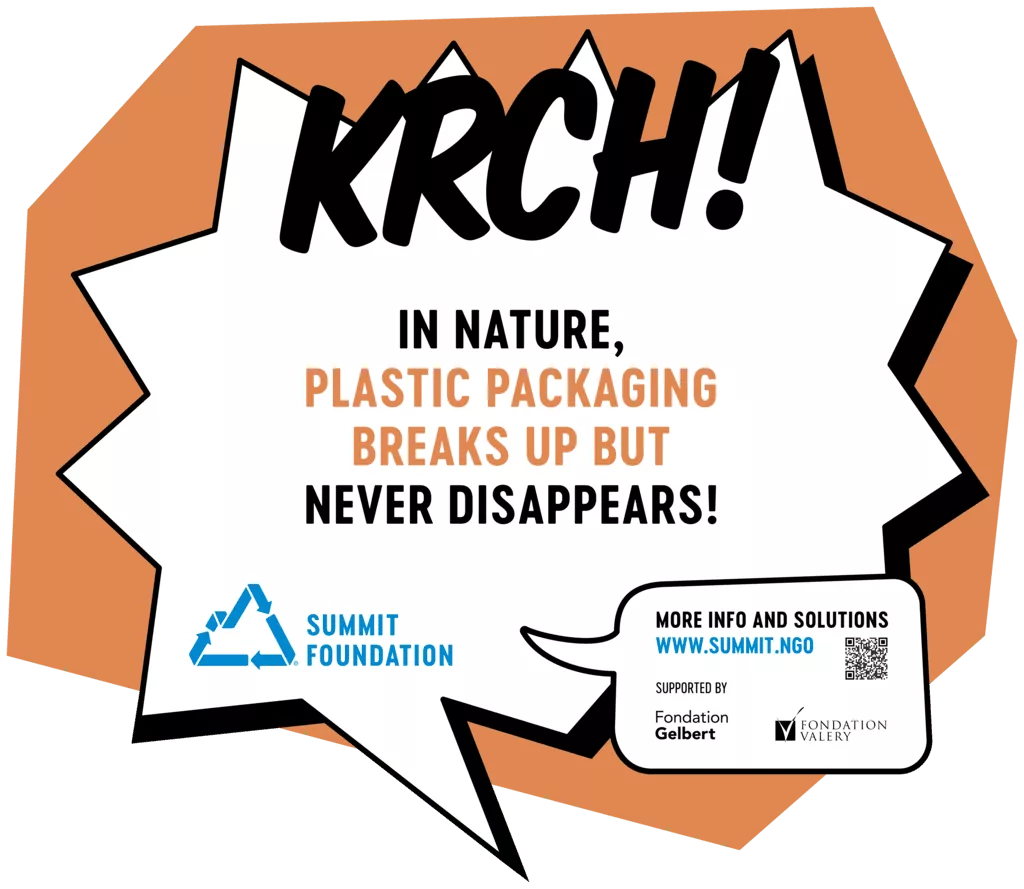
• In Switzerland, 2,700 tonnes of plastic waste are littered in the environment.
• Plastic is not biodegradable. It can remain in the environment for centuries, or may never disappear.
• Plastic breaks down into small pieces that spread in the environment and are ingested by wildlife.
EXPLANATIONS
The problem is that plastic is not a biodegradable material3. It can remain in the environment for centuries before becoming harmless. It may even be that it never disappears4 in nature, meaning that all the plastic released into the environment could still be there. Given how slowly it degrades, plastic accumulates in the environment, increasing pressure on ecosystems. With rising production, this pollution could triple by 20405!
The problem is that plastic is not a biodegradable material3. It can remain in the environment for centuries before becoming harmless. It might even that they never disappear4 in nature, and therefore all the plastic released into the environment is still there. Given the slowness of its degradation, plastic accumulates in the environment, increasing the pressure on the environment. With the increase in production, this pollution could triple by 20405 !
Plastic pollution has various sources8, including littering, which refers to the abandonment, whether voluntary or not, of this waste in public spaces or in nature. The types of waste most commonly found in nature are made of plastic: PET bottles, packaging, cigarette butts, etc... In Switzerland, littering practices are estimated to be responsible for the release of 2'700 tonnes of plastic into the environment9.
Plastic pollution has various sources8, including littering, which refers to the voluntary or involuntary abandonment of such waste in public spaces or nature. The waste most commonly found in nature is plastic: PET bottles, packaging, cigarette butts, etc. In Switzerland, it is estimated that littering practices are responsible for the release of 2,700 tonnes of plastic into the environment9.
To contribute, at your own level, to the fight against plastic pollution, adopt the right behaviors:
- Reduce the use of plastic packaging and make sure it is recycled or disposed of properly.
- When hiking, bring a bag for your waste, choose reusable containers, and a reusable water bottle instead of disposable bottles.
- In mountain restaurants and shops, encourage phasing out single use plastics in favor of sustainable alternatives.
Together, let’s keep our mountains beautiful and plastic free.
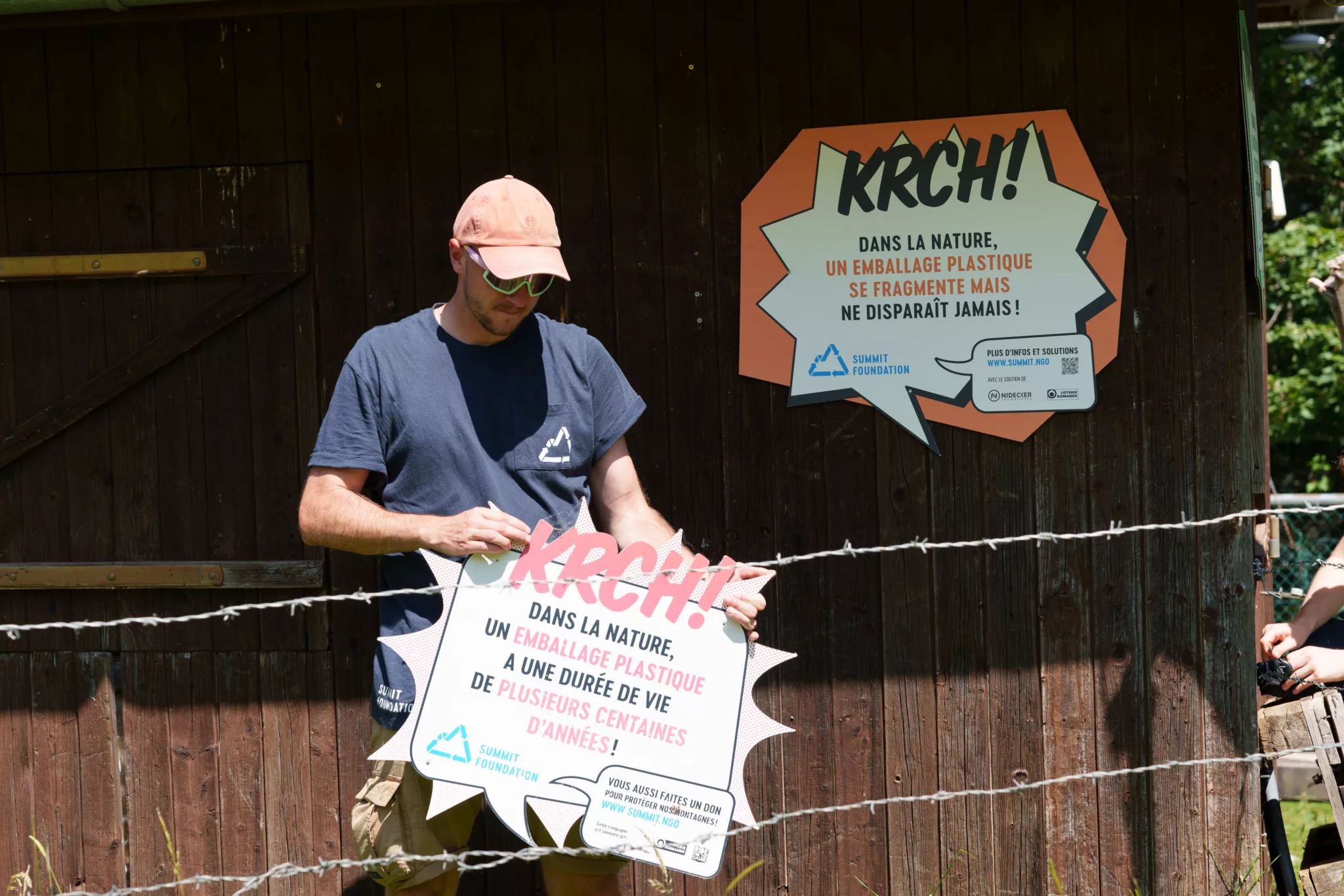
The BULLE KRCH! ORANGE In action
SOURCES
- Our World in Data. «Global Plastic Production with Projections». Accessed September 15, 2025. https://ourworldindata.org/grapher/global-plastic-production-projections?form=MG0AV3.
- Environment, U.N. «Plastic Pollution». August 2, 2022. https://www.unep.org/plastic-pollution.
- Avio, Carlo Giacomo, Stefania Gorbi, and Francesco Regoli. «Plastics and Microplastics in the Oceans: From Emerging Pollutants to Emerged Threat». Marine Environmental Research 128 (July 2017): 2-11. https://doi.org/10.1016/j.marenvres.2016.05.012.
- Napper, I. E., and R. C. Thompson. Plastics and the Environment. 2023. https://doi.org/10.1146/annurev-environ-112522-072642.
- Napper, I. E., and R. C. Thompson. Plastics and the Environment. 2023. https://doi.org/10.1146/annurev-environ-112522-072642.
- Napper, I. E., and R. C. Thompson. Plastics and the Environment. 2023. https://doi.org/10.1146/annurev-environ-112522-072642.
- Summit Foundation - Microplastic Bubble https://summit-foundation.org/bulle-wouh/
- Napper, I. E., and R. C. Thompson. Plastics and the Environment. 2023. https://doi.org/10.1146/annurev-environ-112522-072642.
- OFEV, Federal Office for the Environment. «Plastics in the environment». Accessed September 10, 2025. https://www.bafu.admin.ch/bafu/fr/home/themen/thema-abfall/abfallpolitik-und-massnahmen/kunststoffe-in-umwelt.html.